When you support Habitat for Humanity, you ensure that our mission is carried out in the following key areas:
Affordable Housing
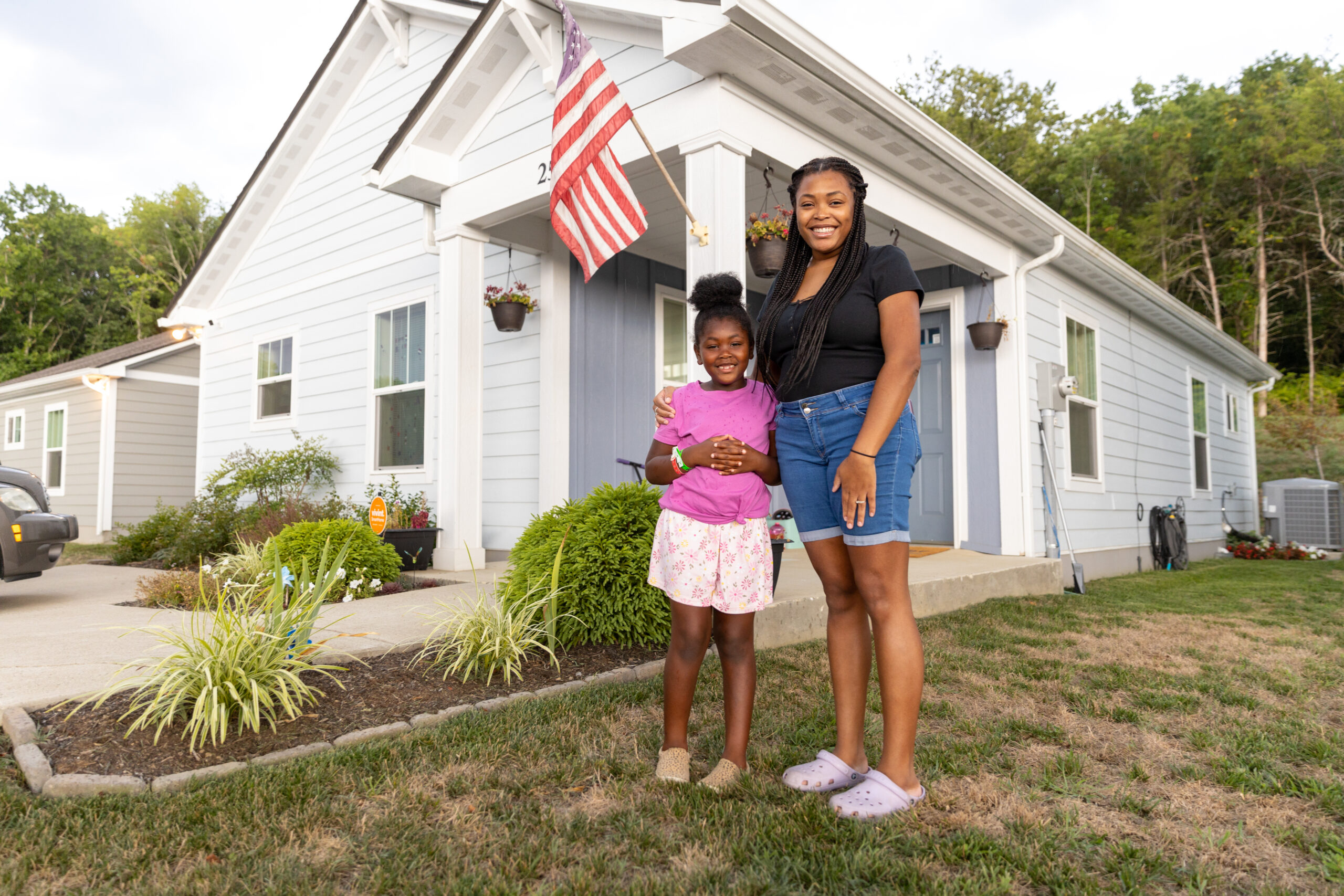
Frankie is a veteran and single father of three who spent years stretching every dollar to cover rising rent and his daughter’s medical bills. Today, he and his kids are home, settled into Hope Springs, a community in Greeley, Colorado, built alongside the families who live there. Through Greeley-Weld Habitat’s community land trust model, these 174 Habitat-built homes will remain affordable not just for Frankie’s family, but for every family who comes after. It’s a cycle of opportunity, by design.
Read Frankie's Story
“We finally have a place to truly call our own,” Frankie says.
Frankie is a veteran and single father of three living in Greeley, Colorado. For years, he balanced the weight of rising rent and medical bills for his daughter, who is battling an autoimmune disease.
Now, as he moves his family into the Hope Springs neighborhood, he can focus on creating a future for himself and his children.
“An affordable home means stability and a lot of peace of mind.”
Designed for real life
From the start, residents like Frankie helped shape the vision for Hope Springs, built with Greeley-Weld Habitat.
“Hope Springs was designed by the community, for the community,” says Cheri Witt-Brown, Greeley-Weld Habitat’s CEO. “We listened to our families to learn what would actually help them.”
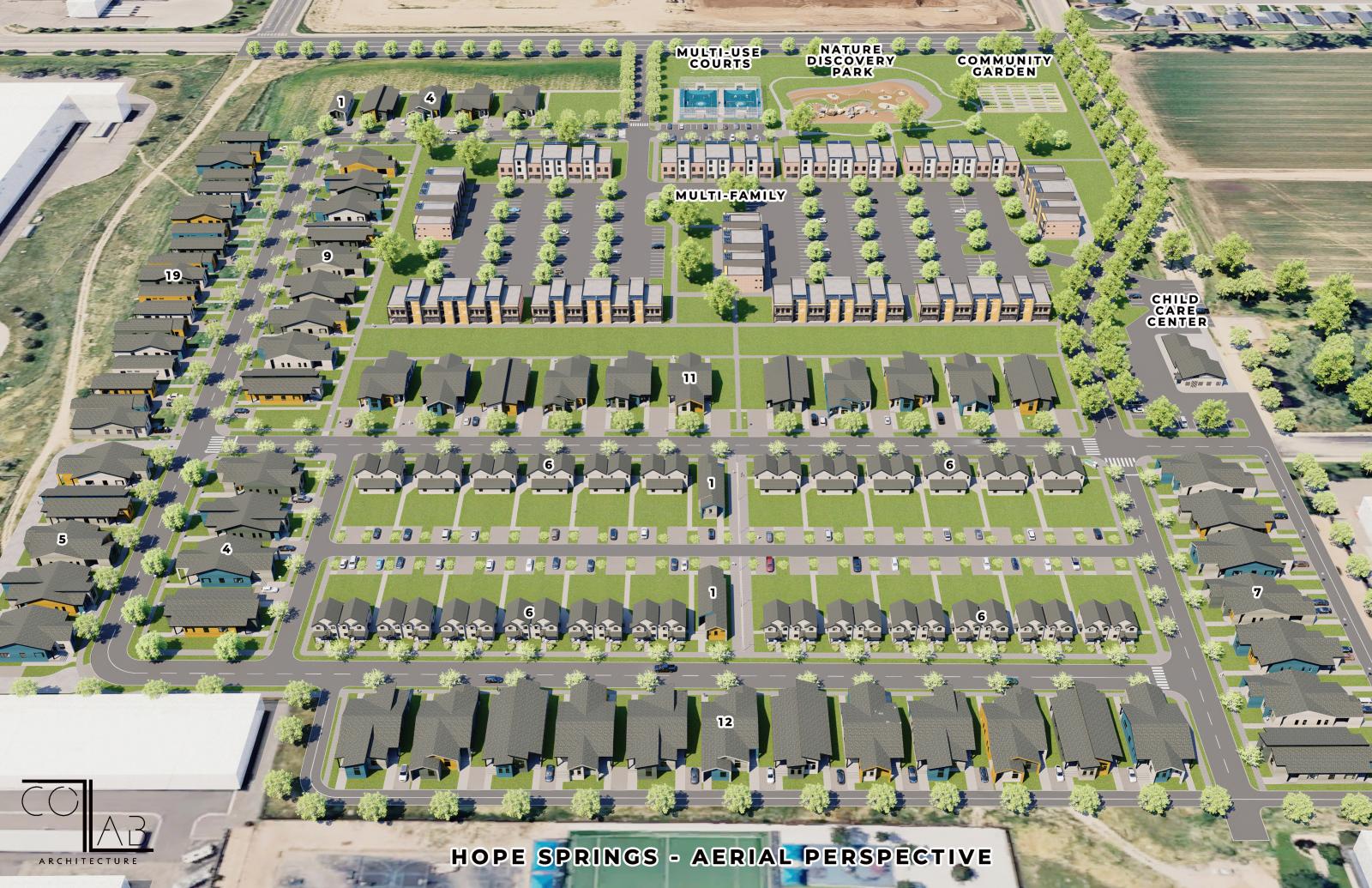
Development of the Hope Springs community is underway, with 25 Habitat families moved in and more coming. The neighborhood has almost 491 affordable homes, with 174 built directly by Habitat.
To bring this vision to life, Greeley-Weld Habitat secured targeted grants and community partnerships to fund essential services and green spaces. The result is a walkable neighborhood where the logistics of daily life are easier:
- On-site support: A child care center and playgrounds.
- Green spaces: Community gardens, nature discovery parks, walking and biking trails.
- Connection: Residents are minutes from shops, bus stops, top-ranked schools and more.
Frankie expects he and his kids will be frequent visitors to the library right across the street.
Creating lasting affordability
We work to make homeownership within reach for the first buyer and for every family who comes after. That’s exactly how Hope Springs is built. The homes here will stay affordable forever through a community land trust.
When we use this model, Habitat owns the land, but the family owns the house. By taking the cost of the land out of the mortgage, the price of the home drops significantly. But the benefits don’t stop on move-in day.
When a family eventually decides to move out, they agree to sell the home back to Habitat or to another low-income family. This creates a cycle of opportunity.
“If I move one day, I take that equity with me, and I can help somebody else who needs an affordable place of their own.”
Hope Springs is a model we’re bringing to communities across the country. In the past two years alone, 200 more Habitat affiliates — a 50% increase — have adopted methods like this to keep homes affordable for generations.

Building Back Better After California’s Camp Fire
When disaster strikes, the path home can feel impossibly long. That’s why Habitat builds with the future in mind, constructing homes to meet rigorous safety standards, with fire-resistant materials and ember-proof design that stand up to whatever comes next. Paired with affordable mortgages and lower insurance premiums, these homes give families more than shelter. They give them stability, resilience and the freedom to put down roots that last.
Because of your support, families like Star’s are not just recovering, they’re thriving.
Read Star's Story
In 2018, Star moved to Paradise, California, with a clear goal: to provide her three children with a community where they could grow deep roots. After years of instability, she was finally close to family and ready to build a permanent foundation.
However, just six months after arriving, the catastrophic 2018 Camp Fire tore through Northern California, destroying Star’s home. “I felt like the plan I had painstakingly built had literally gone up in smoke,” she says.
After the fire, the family eventually landed in a cramped, high-rent apartment far from Star’s parents and support system, but Star was determined to return to Paradise.
That’s when she partnered with Habitat Butte County to build a house in the community she knew was her home.
“That was my hope and dream – that we would be able to come back and stay here. Then, when my kids grow up and move out, they still have a home, a place filled with memories.”
Everywhere we work, we build to the local climate. In Paradise, that means constructing homes to withstand future wildfires. These homes meet rigorous safety standards, built with fire-resistant materials and ember-proof buffers.
Building this way allows families to save on insurance premiums. These lower costs, paired with an affordable mortgage, give families disaster resiliency and financial breathing room.
Today, Star and her children are finally home.
“We have a life. Not just a life, an entire community. This is my daughter’s second year in Little League, and my other daughter starts cheer this year. We have a whole life now.”
Creating Safer, Healthier Homes
More than 50 million people in Latin America live on dirt floors — surfaces that breed the bacteria and parasites responsible for chronic illness in children. Habitat partners with families to make this one critical upgrade, replacing dirt with concrete. Since 2022, more than 30,000 families have made this change with your support. Because a solid floor isn’t just a repair. It’s a foundation for everything that comes next.
Read more
More than 50 million people in Latin America live on dirt floors.
Dirt floors can be breeding grounds for bacteria and parasites that cause respiratory disease and chronic diarrhea. When a household with dirt floors has children, that means the ground they play on is a health risk.
From their first crawl to their first steps, they are constantly exposed to germs. And their parents carry a constant burden: a mother has to think twice about letting her toddler play while she makes dinner, a father worries about the swirl of dust every time he swoops down to pick up his daughter.
Many families work to improve their homes over time, but limited budgets force them to choose which essential repair they can take on, leaving them stuck living with dirt floors.
That’s why we partner with families in Latin America to make this critical upgrade. Since 2022, we’ve partnered with families to replace more than 30,000 dirt floors with concrete.
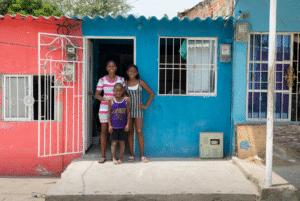
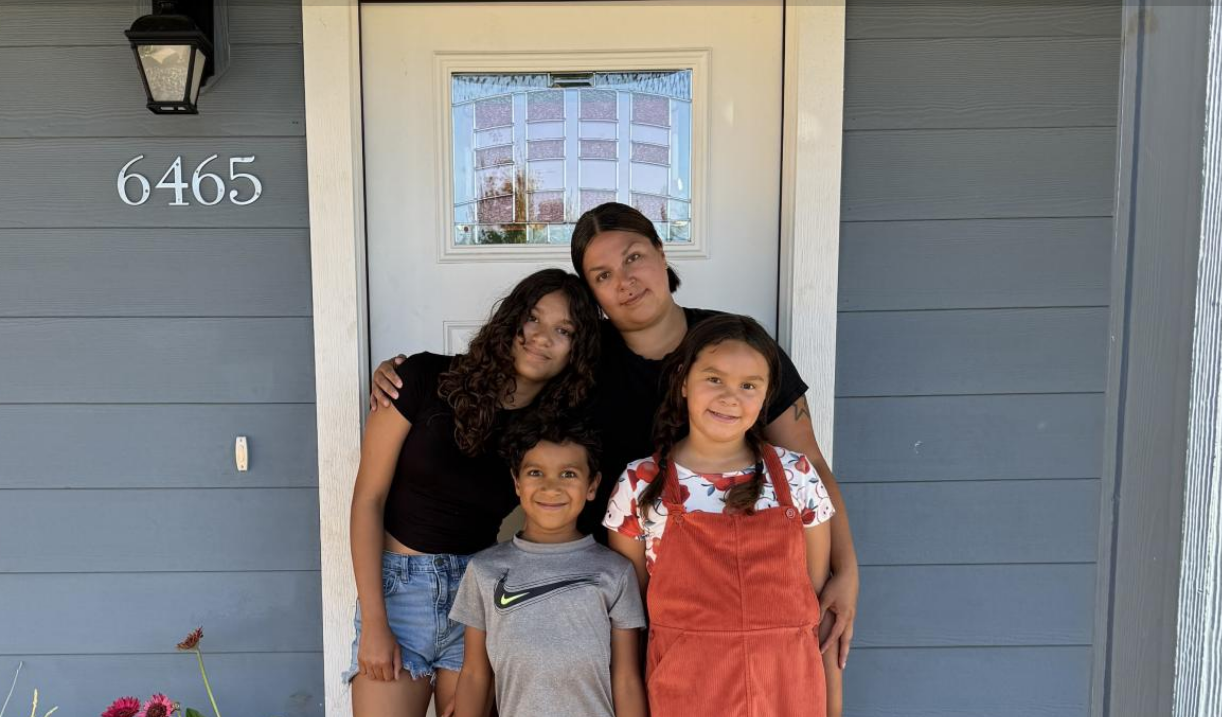
After replacing their dirt floors, Eliana and her two kids are feeling healthier in their home in Cartagena, Colombia.
Evidence shows that this shift has a transformative impact across a household.
When families have clean, dry solid floors, parasitic infections in children dropped by 78%. As children spend less time sick and more time in school, their cognitive development scores jumped 36% or more.
The effects are equally profound for parents. When a home is easier to maintain and children are no longer ill, depression rates drop by 52% and stress is reduced by 45%.
For Eliana’s family, a concrete floor changed everything. Their home Cartagena, Colombia, would often flood, further contaminating their spaces. Between the dampness and the dust, her daughter Yeremis was often sick. Today, with a solid floor, the whole family has a clean, healthy place to live and play.
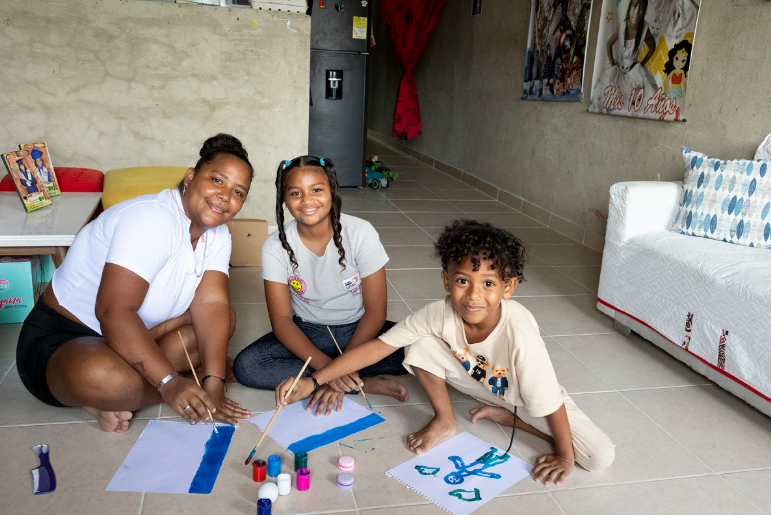
Fátima’s two kids love to play, too, and especially enjoy making art and drawing. Like Eliana, she and her husband had been working to improve her home when she partnered with us to put in a concrete floor. Now, she’s able to clean and organize her home much more easily – something every parent should be able to do. But her favorite change was the one she saw in her children.
“Now my kids look happier,” she says. “You can see the joy in them.”
Fátima and her two kids love creating art on their new, clean concrete floor in their home in Cartagena, Colombia.
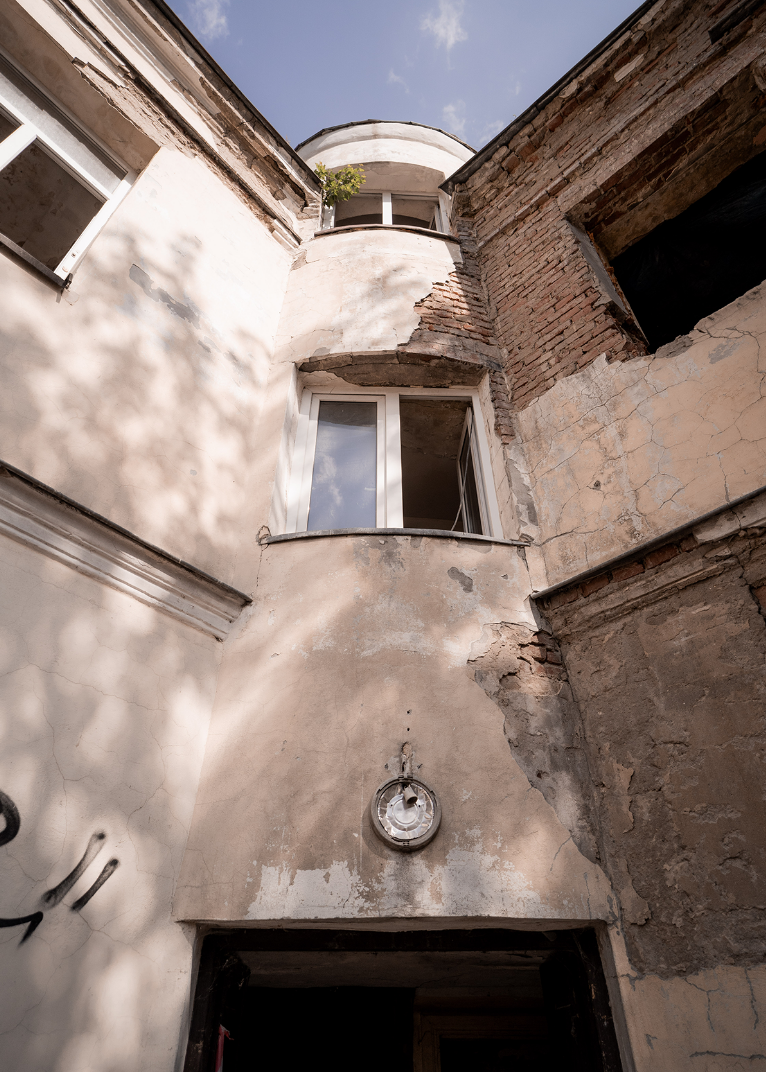
Converting Abandoned Buildings to Affordable Housing
In Poland, 1.8 million properties sit empty while hundreds of thousands of families go without safe, affordable housing. Habitat’s Empty Spaces to Homes initiative is closing that gap, transforming abandoned buildings into energy-efficient, high-quality homes in partnership with the families who need them most. By renovating existing structures rather than tearing down and rebuilding, we reduce harmful carbon emissions by up to 85%, tackling the housing crisis and climate change in a single movement. It’s a proven model with the potential to reach families across Europe — and it’s only possible because of supporters like you.
Read more
In Poland, 1.8 million properties sit empty while hundreds of thousands of people struggle to find a decent, affordable home. We’re closing that gap.
Through our Empty Spaces to Homes initiative, we turn these abandoned buildings into safe, energy-efficient homes in partnership with those who need them most.
By doing so, we’re tackling two urgent challenges at once: the housing crisis and climate change. Saving these structures is the most sustainable way to build. Tearing down and rebuilding creates large amounts of pollution. By renovating existing buildings instead, we cut harmful carbon emissions by up to 85%.
Building for long-term benefits
In the heart of Piaseczno, Poland, we are renovating a historic tenement house that sat vacant for decades. Alongside local partners and volunteers from across the world, we are turning this once-abandoned building into 25 affordable, high-quality apartments.
When we build, we focus on the long-term benefits for residents. During our renovations, we install modern insulation and high-efficiency heating systems. Because most buildings in Poland lack proper insulation, many families are burdened with unaffordable heating costs. By building this way, we ensure residents can afford to not only live in these homes, but heat and power them, too.
“I’m proud that a place once empty will be filled with laughter and joy again. We’re giving these spaces a new life so that people in our city have a place to start theirs.”
Lukasz, a volunteer at the Piaseczno build
A blueprint for change
We’ve shown through projects like the one in Piaseczno that unused properties can become affordable, sustainable, high-quality homes. This approach offers a proven model we can continue to scale, reaching more families with affordable homes that are better for the planet.
To make this possible, we’re advocating for the polices and funding needed to take on more projects and to help more cities across Europe adopt this approach.
Revitalized neighborhoods
Improved shelter
Disaster response and financial education
Partnerships for home construction
Complimentary planning resources
Learn more about easy ways to leave a legacy with our free guides!